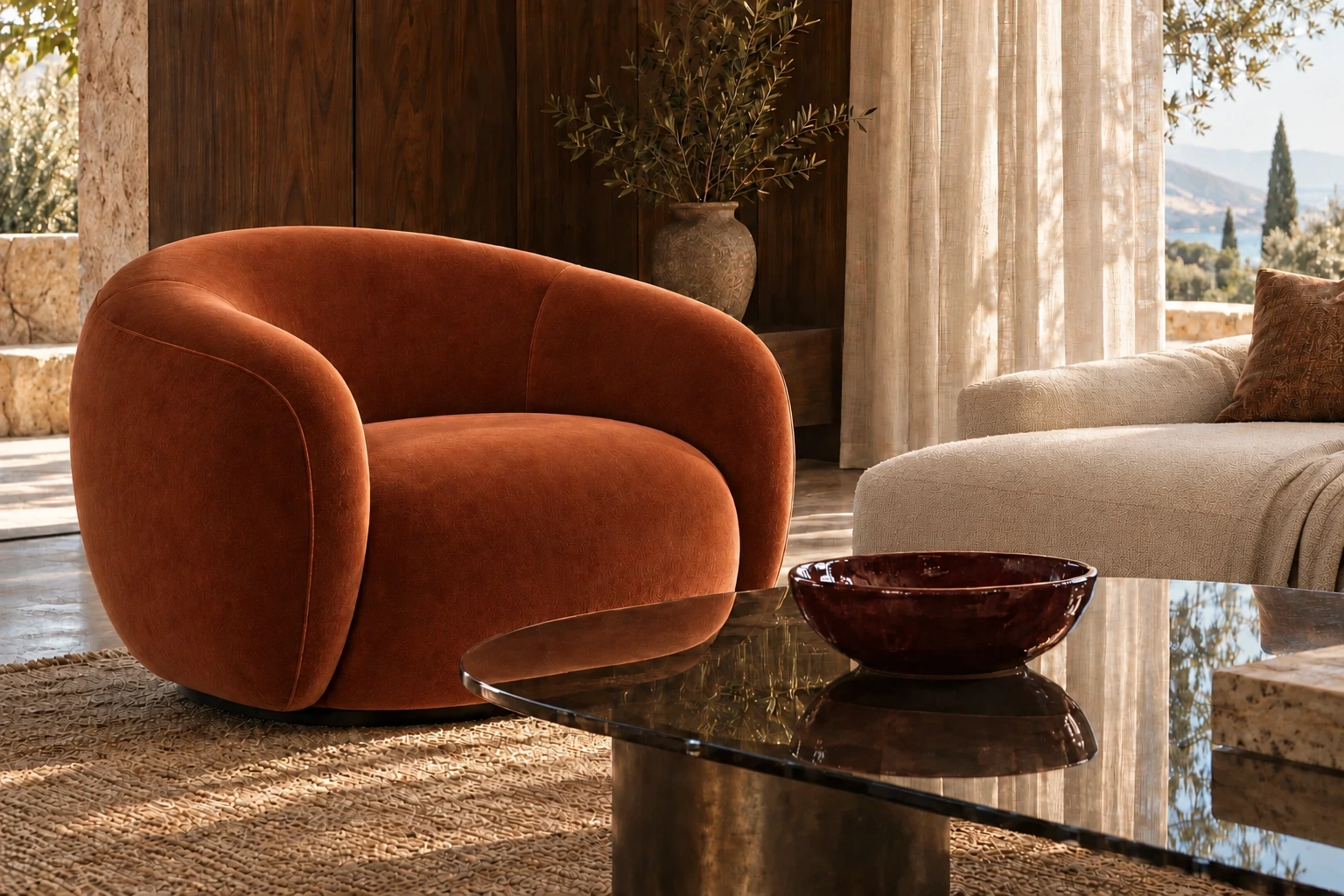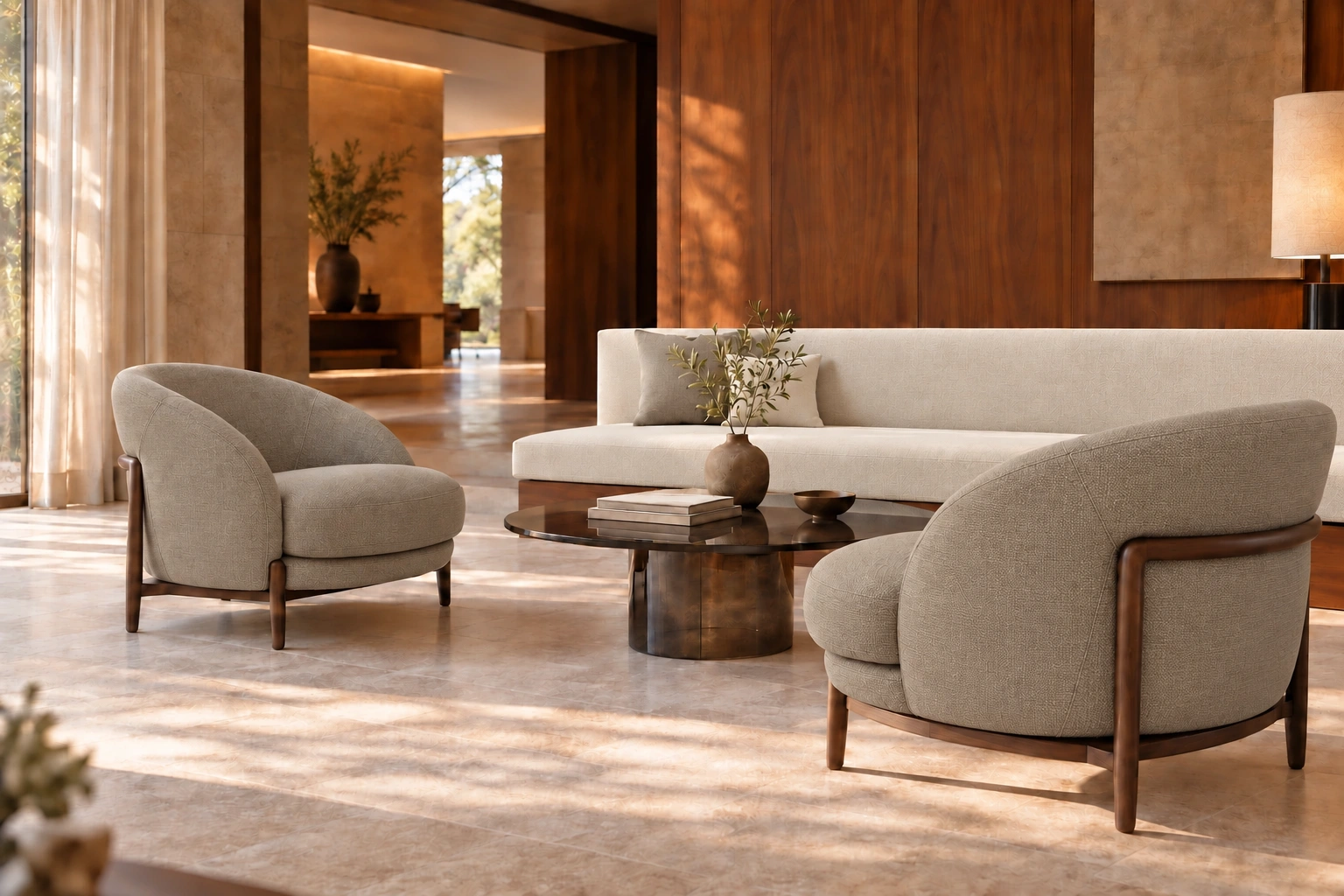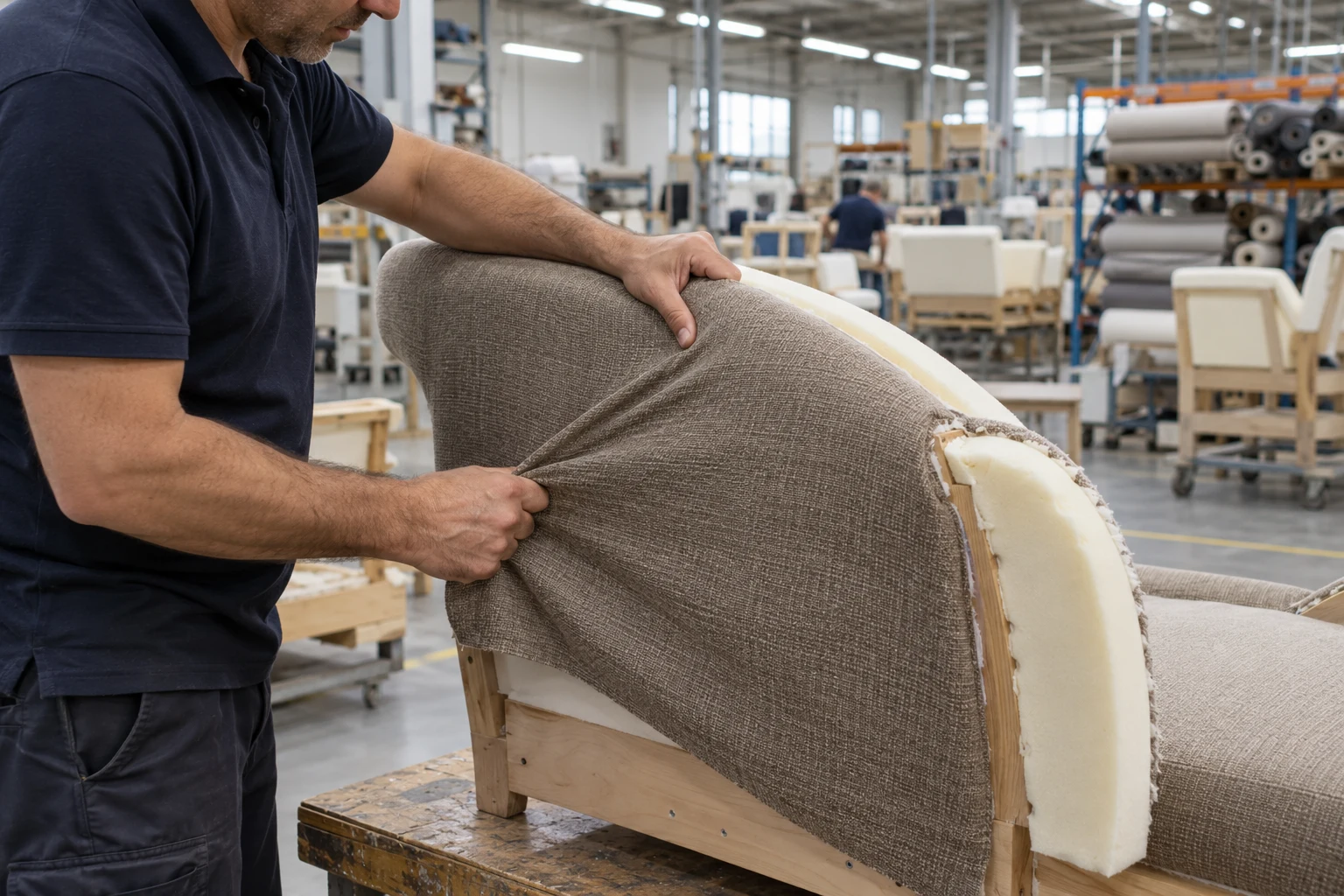
AI-generated concept image created to illustrate this article.
The dialogue between craft knowledge and digital tools shaped the design agenda in 2026. In upholstered furniture, the compelling question is how precision becomes comfort and detail.
The relationship between craft and technology was one of the themes at Heimtextil 2026. Under Craft is a verb, the 26/27 trends developed with Alcova explored connections between digital tools and manual practice. SaloneSatellite 2026 also placed craftsmanship and innovation at the centre of its programme. Both discussions are directly relevant to upholstered furniture.
Our editorial question is a practical one: at what point does a tool help make a better piece? A digital representation can assist with proportions; a technical drawing can clarify a joint. The result still needs to be tested against actual materials, because fabric, foam, timber and leather do not behave like abstract surfaces.
Before a stitch, there is a decision
A visible seam begins long before a needle touches the material. Its route, relationship to a curve and meeting point with another line all need consideration. Those decisions affect how a piece is read: a seam can emphasise an outline, divide a volume or clarify the relationship between seat and back.
The same design may need adjustment when its covering changes. An open weave, velvet with a directional pile and leather with natural variations each present different challenges. Choosing material only at the end can therefore constrain a project. Form and upholstery benefit from an early dialogue, while proportions and possible solutions can still be explored.
A sample made over a small curve can reveal what a flat swatch cannot: how a surface stretches, takes tension or forms folds. The point is not to celebrate every irregularity automatically. It is to distinguish material character from an execution problem that should be resolved before the finished piece is made.
What an image cannot test
Concept images allow quick comparisons of settings, scale and colour combinations. That is useful when discussing an intention, but it cannot replace a comfort trial. A cushion can look soft and provide very different support from what was expected. An arm height can work in a composition yet feel awkward to the person sitting there.
This is where a prototype has a distinct role. Sitting down, standing up, resting the forearms and changing position help assess the relationship between design and use. A useful trial does not seek a universal feeling: it considers the intended users and purpose, whether that is dining, conversation or a longer period of rest.
Observations become more useful when they are specific. Rather than simply calling a seat comfortable, note where support is felt, whether its depth allows the back to rest and whether the edge interferes with leg position. That language brings designers, makers and clients closer together and reduces different interpretations of the same intention.
A detail has to work
In finishing, consistency matters as much as visual effect. Upholstery tension should be considered at transitions, seam intersections should be coherent, and supporting elements should relate to the overall design. A close photograph helps reveal these points, but a piece also needs to be examined from every side.
Valuing handwork does not mean setting quality criteria aside. Careful execution makes decisions legible: a line follows a curve because it was planned that way; a joint appears simple because its elements have been reconciled. The restraint of a good finish can conceal many hours of study and several earlier attempts.
It also matters how a piece will be cared for. A construction detail can make future work easier or harder, a difference rarely apparent in the first photograph. Checking component access, upholstery guidance and actual service possibilities turns an aesthetic preference into a better informed choice, without promising repairs that were never designed for.
Documenting to improve
The most useful meeting of technology and craft happens when knowledge becomes clearer and easier to share. Photographing a sample, recording an adjustment and keeping a drawing revision help preserve decisions. This is a productive way to look at upholstery's future: tools that extend precision and hands that continue to interpret the material.
Pelcorte Journal