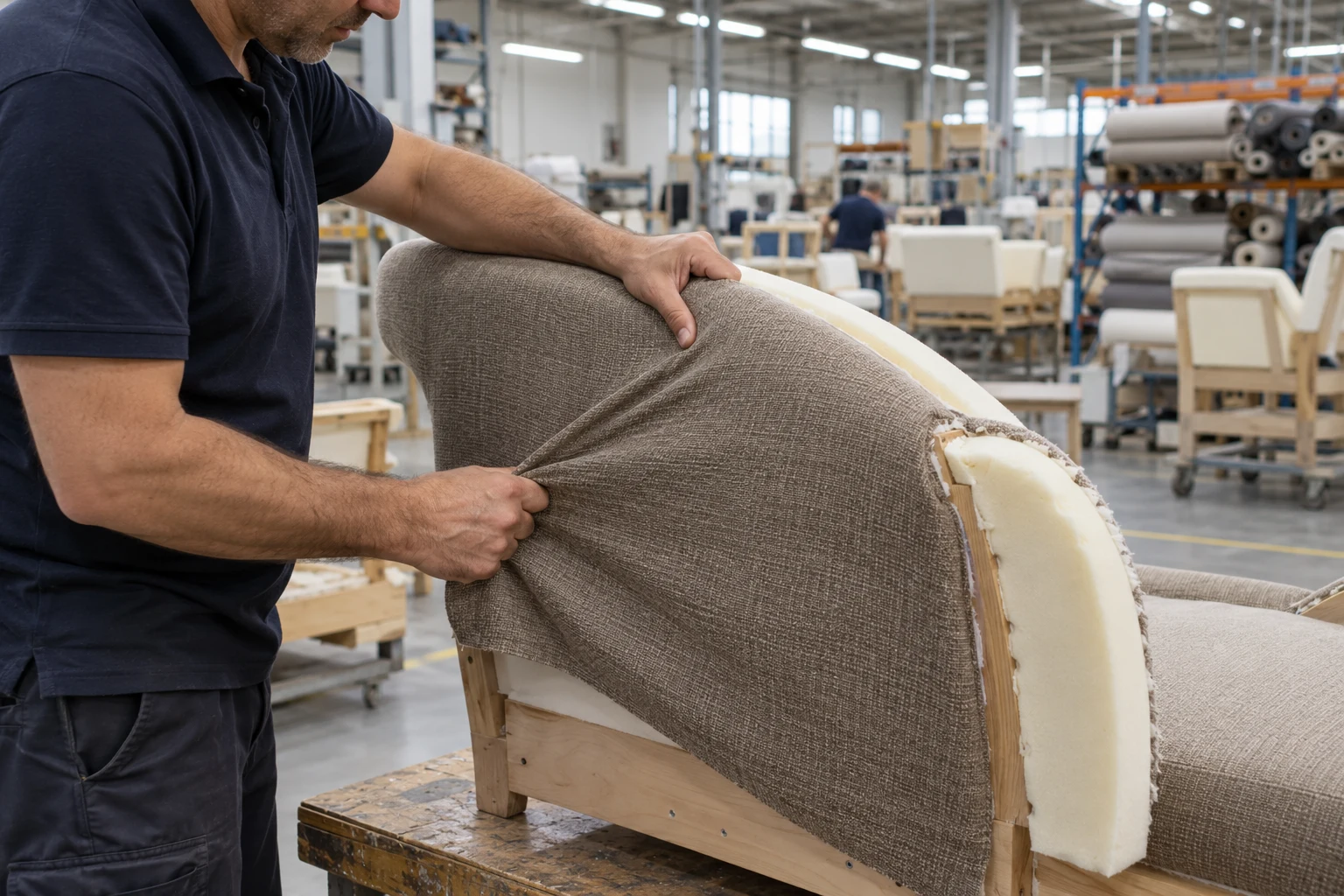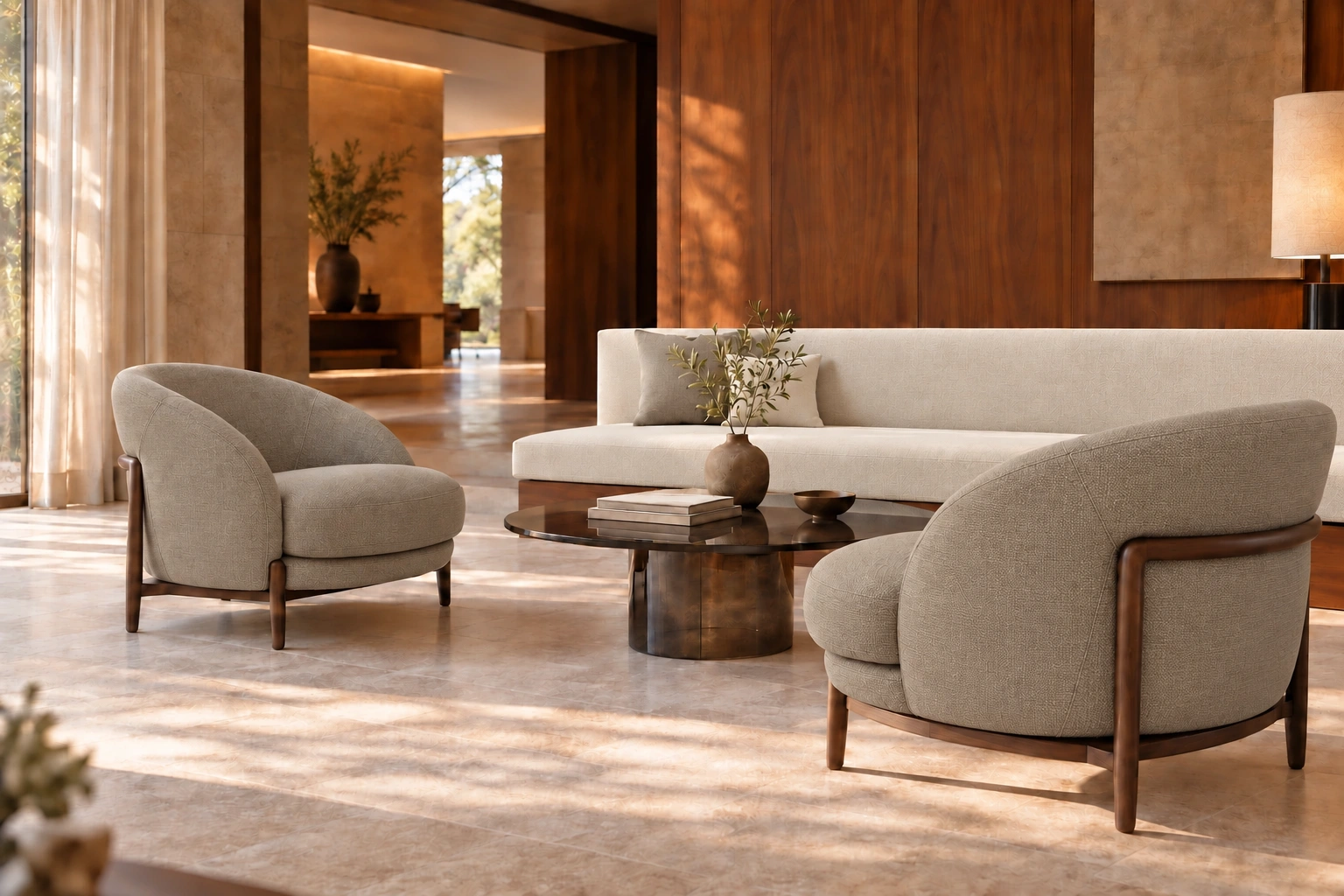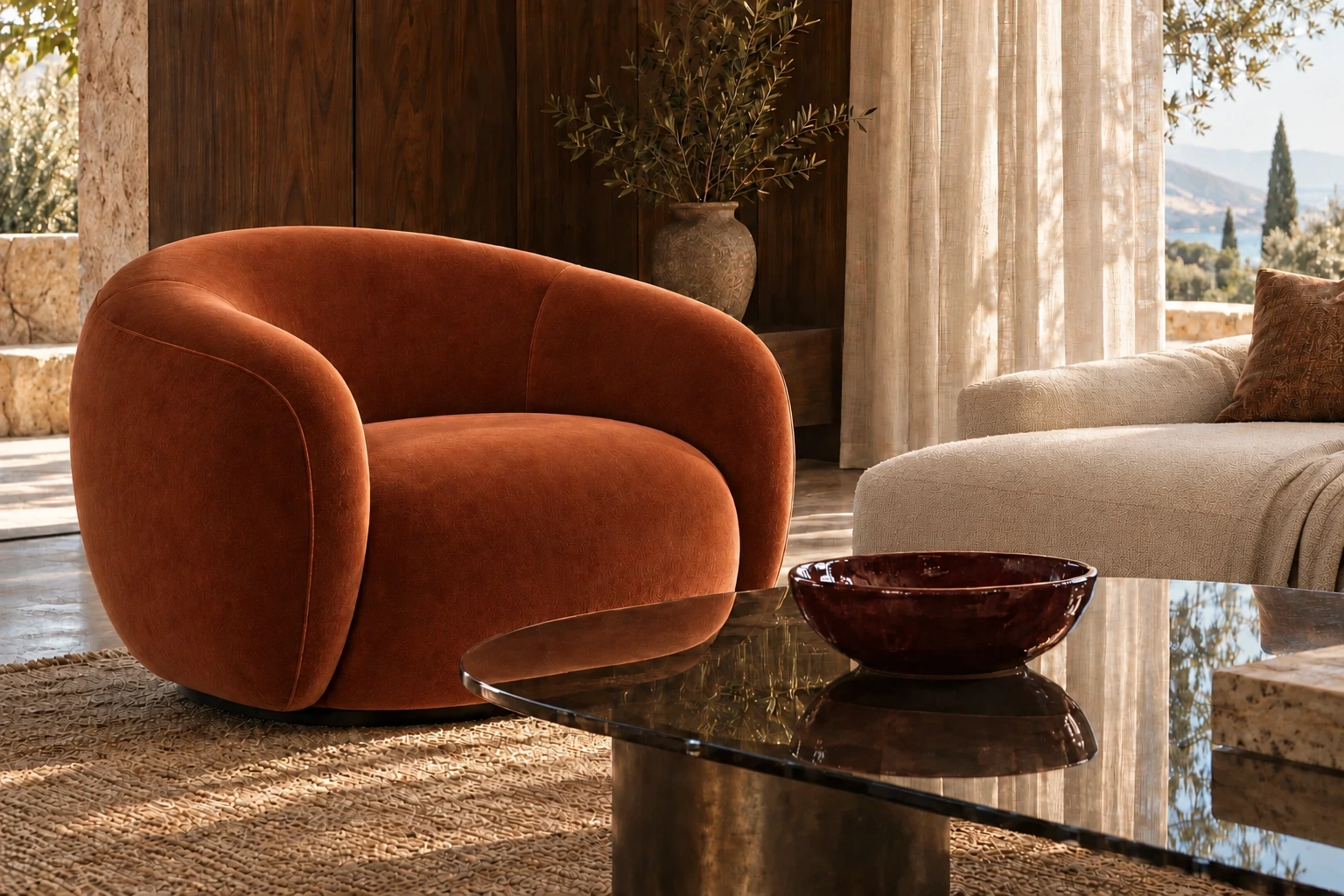
AI-generated concept image created to illustrate this article.
Heimtextil Trends 27/28 reopen the conversation about what we expect from home. Between performance and respite, textiles have a role that reaches far beyond colour.
On 7 September 2026, Heimtextil introduced its 27/28 trend direction, developed with design platform Alcova. The Home-Maxxing theme brings together two expectations: improving how spaces perform and finding room for respite. The physical presentation is scheduled for Heimtextil in Frankfurt from 12 to 15 January 2027.
Among the announced directions, Hyper Presence highlights the sensory experience of materials and the way time contributes to their character. For someone planning a room or choosing upholstery, our practical reading is to start with how a piece feels in use, then consider how it appears in a photograph.
Starting with touch
A fabric can look restrained from a distance and reveal an expressive surface up close. The relief of a weave, the direction of the pile and the transition between light and shade change our reading of volume. On a rounded armchair, this can matter as much as colour: the upholstery helps articulate its shape.
Compare samples with your hand resting on them for a few seconds, rather than with a quick touch. A smooth surface feels different from an irregular weave. A more enveloping fabric may suit a reading chair, while another texture may feel more appropriate at a dining table. Context gives a preference meaning.
Texture also needs room to be noticed. Using strongly textured surfaces on every piece can make a composition feel visually heavy. One approach is to concentrate relief on an armchair or sofa and pair it with quieter materials: simply detailed timber, glass, a matt wall or a curtain with a soft drape.
A palette built in layers
Rather than choosing five colours in isolation, it can be more useful to build relationships between three materials. Dark timber adds depth beside pale fabric; warm leather gives a glass table a more domestic setting; a restrained green can introduce contrast without dominating. These are composition ideas, not a universal formula for next season.
Look at the sample alongside the materials that will remain in the room. Flooring, curtains and even light reflected from a wall influence colour perception. A catalogue photograph is a starting point, but a better informed decision comes from seeing the fabric in the morning, late afternoon and under the room's normal artificial lighting.
Consider scale as well. A strongly contrasting small swatch can feel balanced in the hand and become dominant across a large sofa. Where possible, viewing a larger area or an upholstered piece helps reveal the rhythm of the weave. The aim is a presence that remains convincing after the initial excitement has passed.
Comfort that follows everyday life
A room's comfort also depends on how people use it. Some sit upright to talk, some need support for reading, and others prefer to put their feet up. Before selecting upholstery, trying seat height, depth and arm support helps prevent a compelling image from hiding a choice that does not suit its user.
Maintenance is part of that experience. Asking for cleaning instructions and checking suitability for the intended use matter as much as choosing the right shade. A material should not be assumed easy to care for simply because it looks robust. Composition, finish and supplier guidance need to be considered together, particularly in busy homes.
It helps to leave room for a home to change. A well-proportioned piece with upholstery chosen in relation to its setting can accompany new tables, lighting or objects. That flexibility begins with planning: preserve circulation, avoid furniture that overwhelms the room and imagine an ordinary day, not only the moment before guests arrive.
Taking time to choose
Our reading for 2027 is therefore an invitation to pay attention. Feeling samples, trying furniture and observing light are simple actions that make a choice more personal. Trends offer useful questions; the answer should come from the home and its occupants. A successful interior keeps its beauty when everyday life begins.
Pelcorte Journal