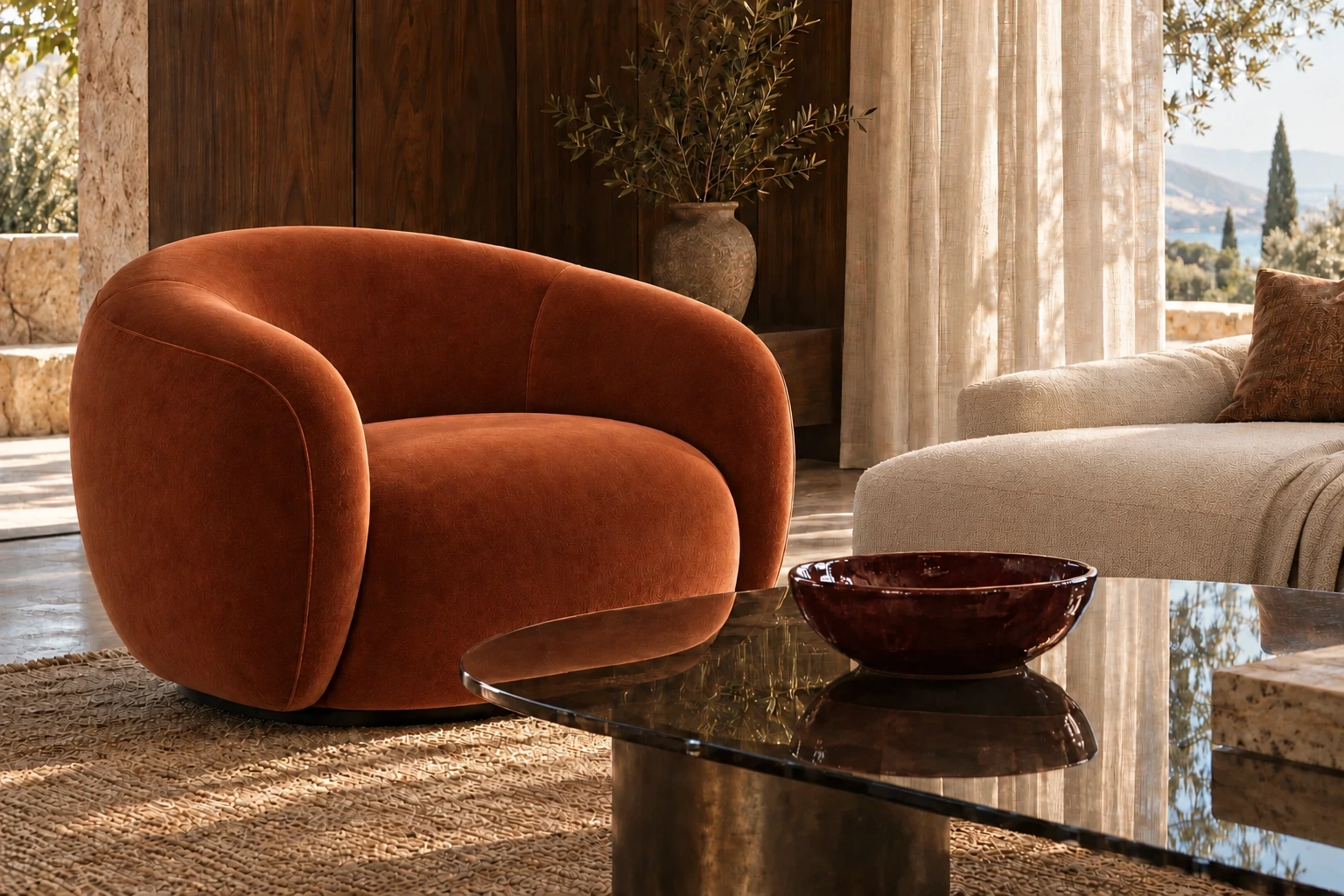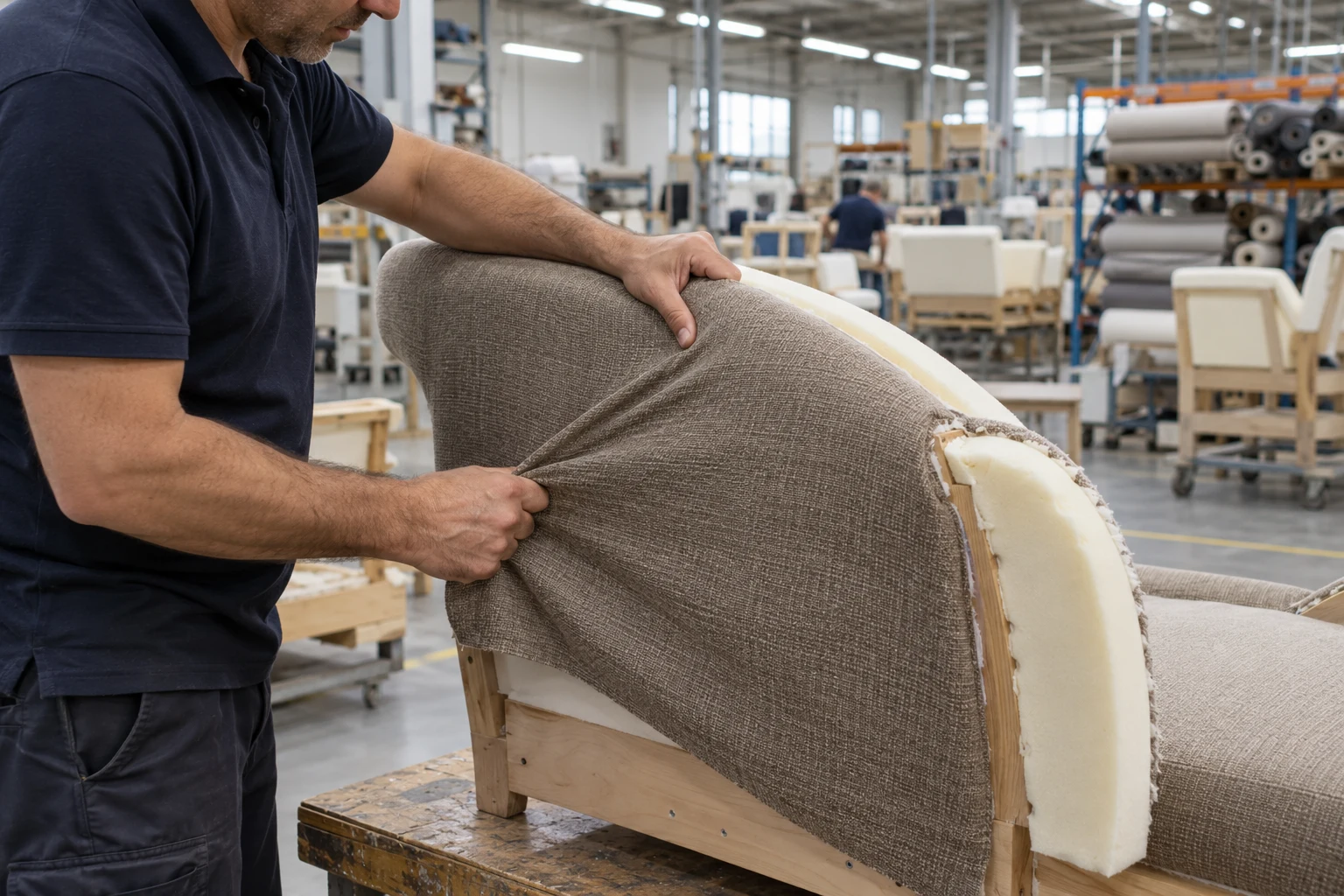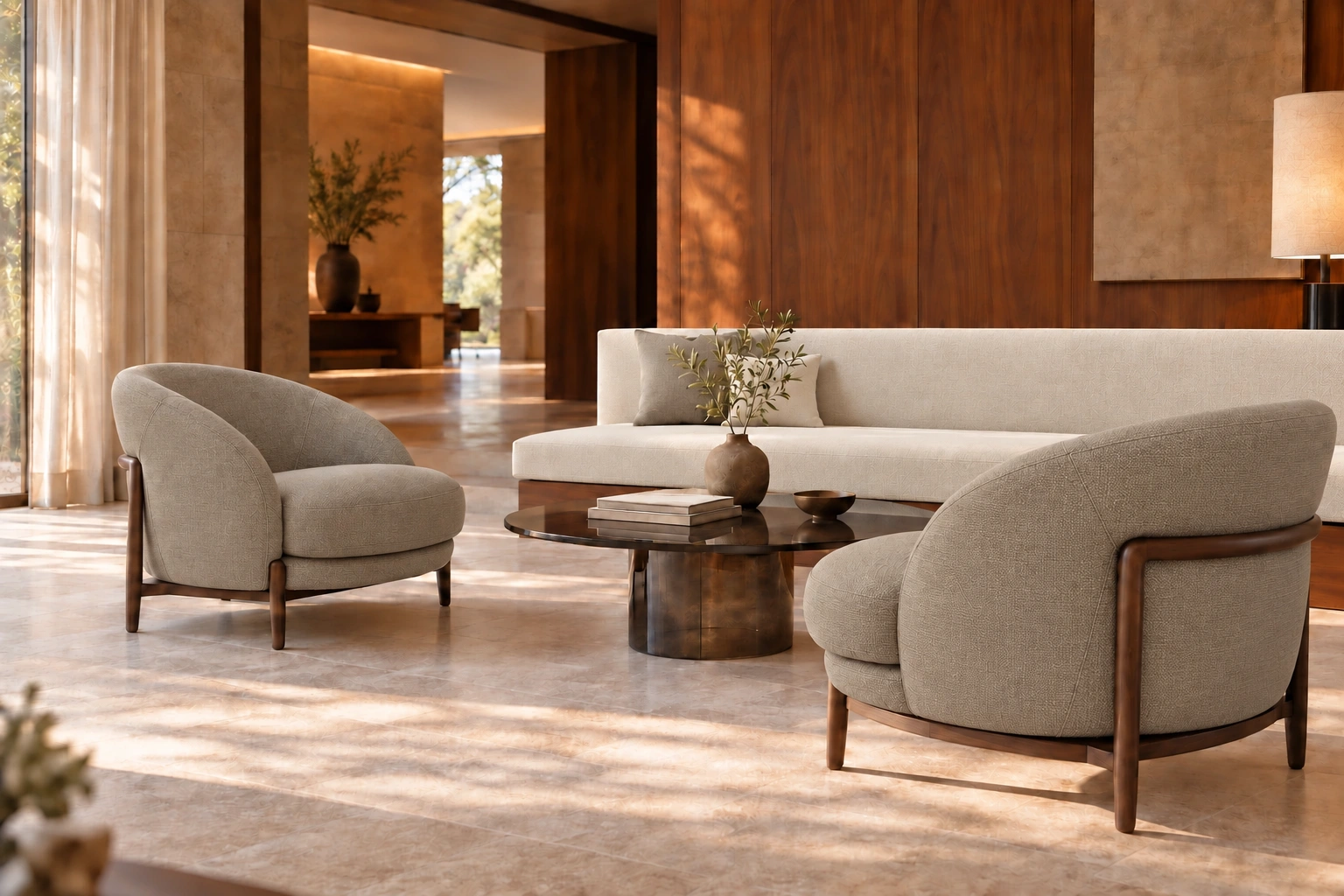
AI-generated concept image created to illustrate this article.
As Salone Contract prepares for its 2027 debut, attention turns to the project as a whole. Hotel furniture needs to bring together atmosphere, everyday use and maintenance.
The preparation of Salone Contract signals the furniture sector's attention to integrated projects. With a masterplan entrusted to OMA's Rem Koolhaas and David Gianotten, the Salone del Mobile initiative develops through 2026 ahead of a dedicated exhibition in 2027. The announced programme includes an international road tour starting in September 2026.
Its starting point is to see contract furnishing as a relationship between design, production and services, rather than simply a selection of objects. Applied to hospitality, that perspective opens a useful question: how can furniture contribute to a place that works well every day? The following considerations are our practical reading of that challenge.
Starting with the guest experience
A lobby welcomes people in different situations. Some wait for a few minutes, while others talk, read or organise the rest of their day. A single type of seat may not respond to all these uses. Offering areas with different degrees of privacy creates choice without turning the space into a collection of unrelated settings.
Furniture scale needs to be assessed alongside circulation. A generous armchair may bring presence and comfort yet make little sense if it obstructs luggage or places two groups too close together. A floor plan helps test distances; a physical sample gives a clearer understanding of volume, access to the seat and ease of use.
Atmosphere also comes from relationships between materials. Leather, textured fabric, timber and glass can coexist without every piece demanding attention. A family of tones or a repeated detail establishes continuity. Small differences in form can then distinguish a reading area from a conversation setting while preserving a recognisable identity throughout.
Specifying for actual use
An upholstery image is only part of the selection process. Gather information on composition, behaviour in use, cleaning and suitability for its setting. Test results should be understood alongside their conditions and the intended application. An isolated number on a data sheet does not describe the whole experience of a chair or replace assessment of the finished piece.
Cleaning methods also need to be aligned with the team operating the space. A finish selected without considering maintenance routines can create avoidable difficulties. Before ordering, clarifying permitted products, recommended procedures and limitations gives the operations team useful information and allows alternatives to be compared against the hotel's actual pattern of use.
Approving a sample piece deserves time. Beyond appearance, consider support, stability, cleaning access and upholstery behaviour at contact points. Photographs and records of that approval help communicate the expected result. The aim is to reduce ambiguity between the design intention and what will eventually be delivered.
Considering maintenance from the start
Thinking about service life means asking what happens when a part needs attention. Can a component be replaced? Are its fixings accessible? What fabric and finish information should be retained? Answers vary by product and need to be confirmed with the supplier, rather than assumed from a general description of durability.
A simple dossier of references, approved drawings and maintenance guidance can make future decisions easier. When teams change or an area needs additional furniture, having that information available avoids starting again. Guests rarely see this organisation, yet it is part of the care that preserves consistency between pieces and interventions over time.
Aesthetic longevity deserves equal attention. An interior can have personality without repeating a visual effect across every surface. Proportion, light and a considered selection of materials leave room to refresh smaller elements. The project can then evolve without requiring every piece of furniture to be replaced simply because the decorative direction has changed.
An identity that lasts
For anyone preparing a hospitality project now, the opportunity is to bring these conversations together from the start: appearance, comfort, production and daily care. The desired outcome is a welcoming space that remains coherent and can be supported over the years. Elegance becomes more convincing when the guest experience and the work of those caring for the place support each other.
Pelcorte Journal